


SEO teams can tie organic results to revenue by track user journey through mapping comprehensive user journeys in GA4 and identifying hidden conversion opportunities.
Inside many companies, SEO reporting still depends mainly on popular measures like keyword tracking, traffic graphs, etc. while the direction side raises an apart question: “How much income did this actually drive?” Without the ability to track user journey, answering this question becomes difficult.
Years before, I employed to think this was merely a communication gap. Over time, I realized the problem was not communication at all; it was dimension. Most SEO dashboards end at visibility and traffic, so of course, decision makers do not understand the entire benefit.
The traditional metrics tell us simply how users come. They demonstrate almost nothing concerning what happens following the click. To truly track user journey, we must to know if visitors find what they need, connect with information, proceed through important journeys, and ultimately convert.
Why Traditional SEO Reporting Falls Short
Many reports end at: Impression > Click.
But the genuine value-generating user experience extends beyond that:
Initial impression > Initial Click > Initial landing > Initial Engagement > Micro-Conversion > Conversion/Drop-off.
What I discovered is that search engine optimization value is not missing, but it’s disguised in phases 3 to 6. Once I started searching at the work we perform through this perspective, chances that weren’t visible previously were obvious. And most of the largest victories came from building how current traffic behaved.
What Full User Journey Tracking Lets You See
When you track the whole user experience, you can:
- Understand which organic sessions contribute to business outcomes.
- See perfectly where high intent users drop off.
- Prioritize content or user experience enhancements with clearer explanation.
- Identify which landing websites generate real buyers.
- Quantify the benefit of search engine optimization more confidently. The discourse switches from “traffic grew” to “we cleared friction from this travel and opened X conversions.” It’s a totally different level of transparency for you and for stakeholders.
How To Set Up User Journey Tracking In GA4 In 4 Steps
You do not require a huge analytics makeover to start getting improved insights. A few of basic phases are enough to understand where the plot breaks.
|Google Analytics 4 actually gives you the instruments; you just require an organized strategy.
Here are the phases you can follow:
1. Start with Explore > Funnel Exploration
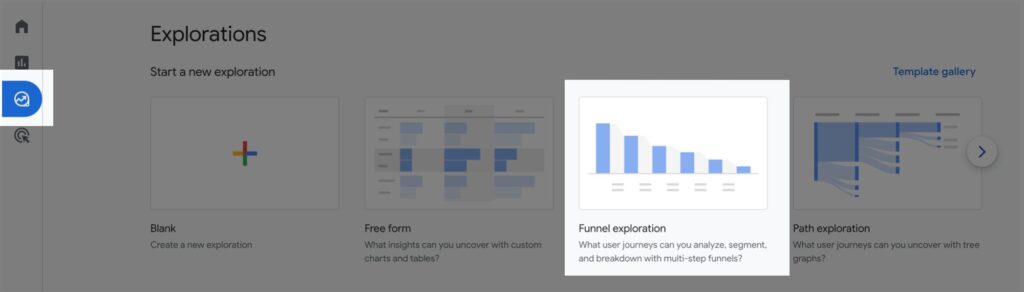
- Go to the Explore area situated in the left panel.
- Find the Funnel exploration among the other choices and click on it.
Once the Exploration analysis pages displays, a set of metrics will be configured by default. To examine a specific user trip the way you require, you must change the metrics as stated in the second step.
2. Set Variables
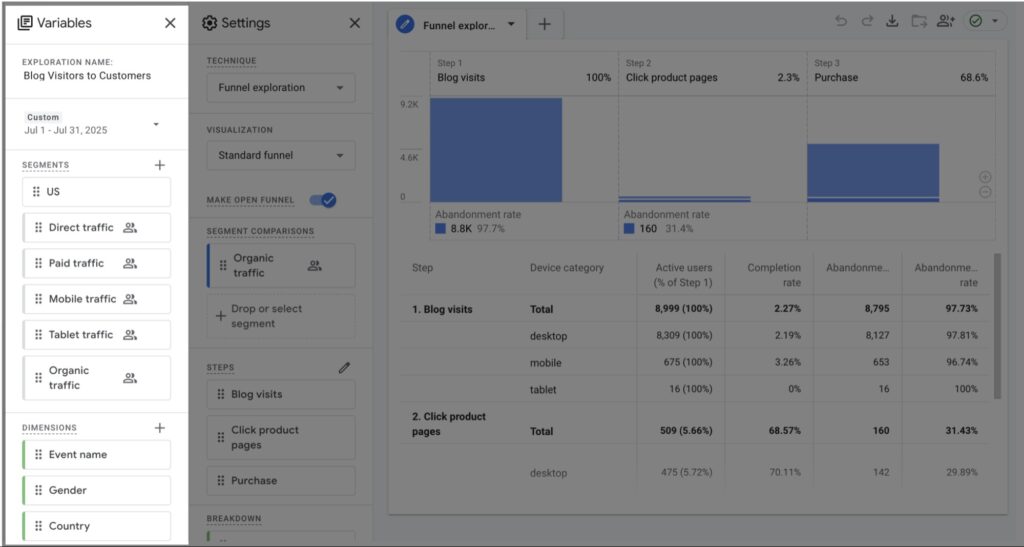
- Give your investigation report a name.
- Set the time range you require to analyze. GA4 allows you to juxtapose apart date ranges as well.
- You will see predefined sections that highlight specific user categories. However, if you wish to construct one from scratch/choose different section choices, click on the plus (+) icon situated next to Segments. The opening modal allows you see other parts and make a new one.
- You’ll notice predefined widths to break your data below so. If you need to select different width, click on the plus (+) icon situated next to Dimensions.
3. Configure Tab Settings
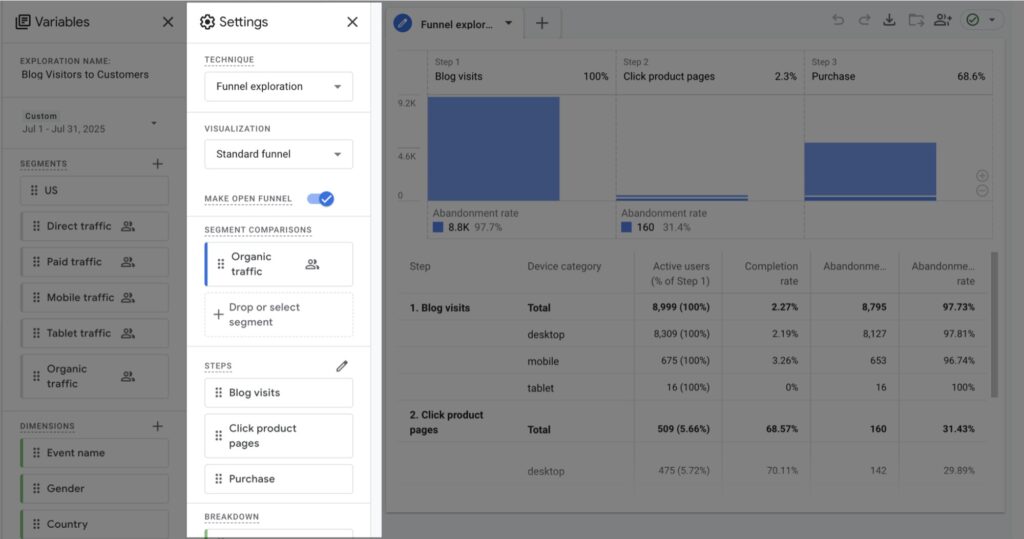
- A significant consideration here is the open funnel choice. If customers can hop into your trip at multiple stages, perhaps they land direct on a product page from an ad, skipping the blog, you require an open funnel. A closed funnel assumes everybody starts at step one.
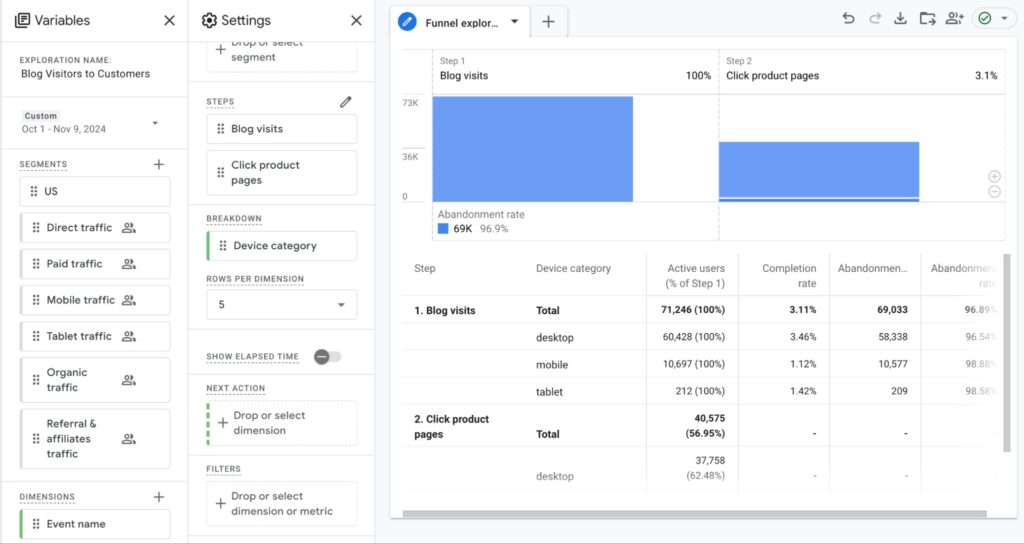
- Drag and drop the sections you require to analyse into the Section Comparisons portion in the Settings. With this stage, you simply identify the user types you wish to understand the conduct of. In the example above, I chose Organic traffic only as I require to examine users coming from organic sources.
- The most crucial aspect is setting the phases outlining the user pathways you want to evaluate. To construct phases, click on the pencil icon next to phases and determine phases using your events and parameters. Within each stage, you can determine the special events and parameters. Steps can occur many times inside the identical session or over apart sessions, dependent on user activity.
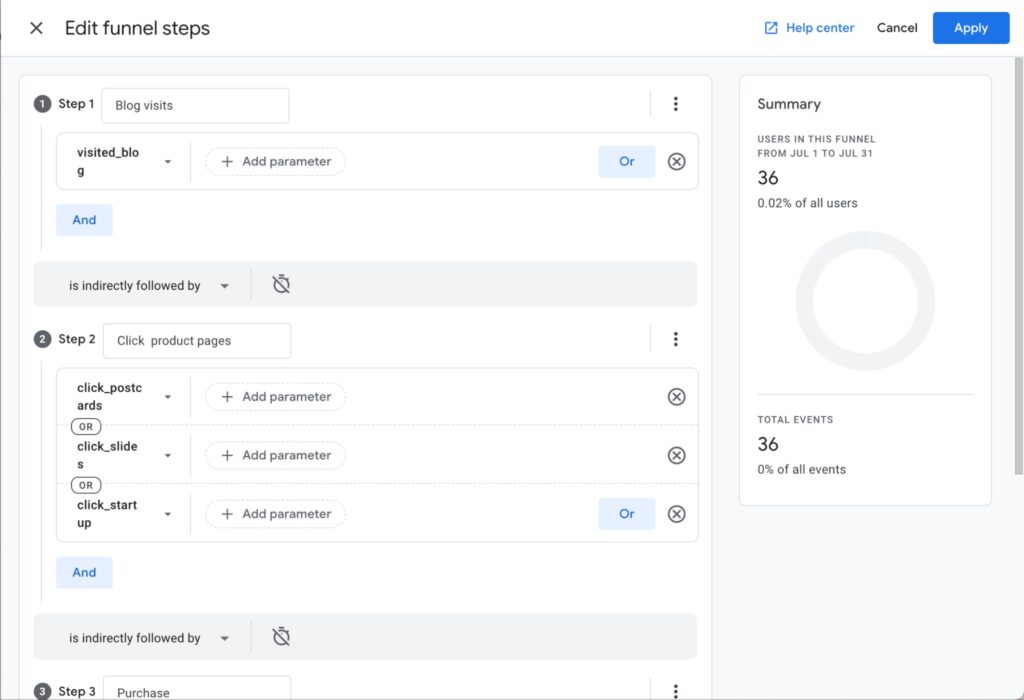
My sample conditions in the phases characteristic Designmodo products, the brand I work for.
Important Note: I strongly advocate implementing custom events, which are the main advantage of GA4, to track special user behaviors. With this technique, you can go beyond the predefined occurrences and unearth relevant insights. For example, if you require to track signups or call-to-action button clicks, then establishing custom events will save your life.
4. Use Breakdowns To Uncover Detailed Insights (Optional)
Once the funnel is operating, drag the Dimensions you require from the Custom attributes column and drop them into the break down area. Breaking the data down into dimensions can help identify some opportunities. For example:
- Device grouping discloses conflicts based on devices (typically the main offender).
- Country differentiates highly intent markets from poor-intent ones.
- Gender shows gender-related disparities in conduct or conversion (needs Google Signals).
These splits typically reveal patterns that traffic stats can’t.
Save The Exploration As A Custom Report
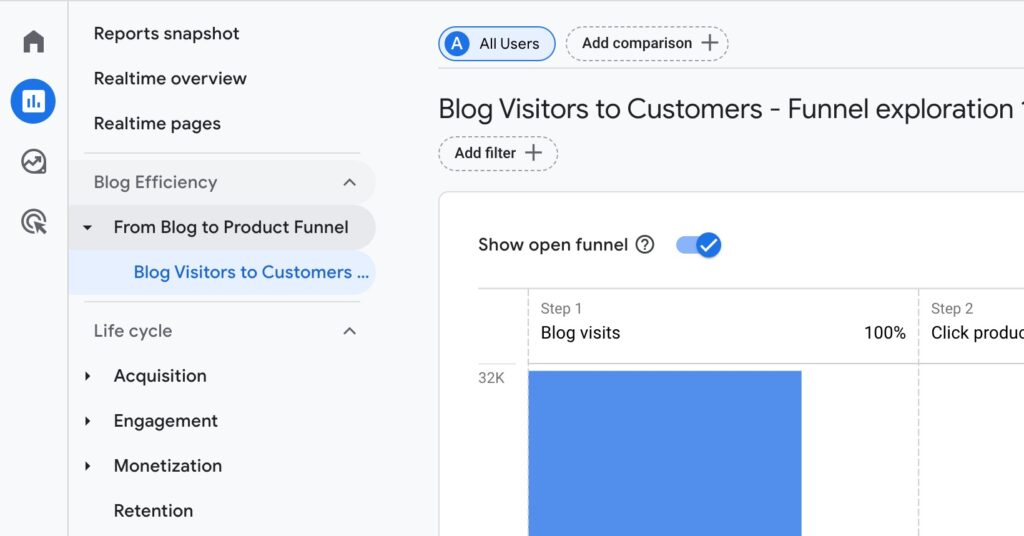
Once you’ve developed this great funnel, a truly smart thing to do is to store it as a customized report in your GA4 library. It implies it will be present in the left navigation, same like the default reports, while you wish to check it. You can monitor that user experience consistently, notice trends, detect frictions, and respond faster.
To save it as a customized report:
- Go to the Reports area in the left panel on your GA4 Dashboard, discover the Library choice at the bottom left of the report section.
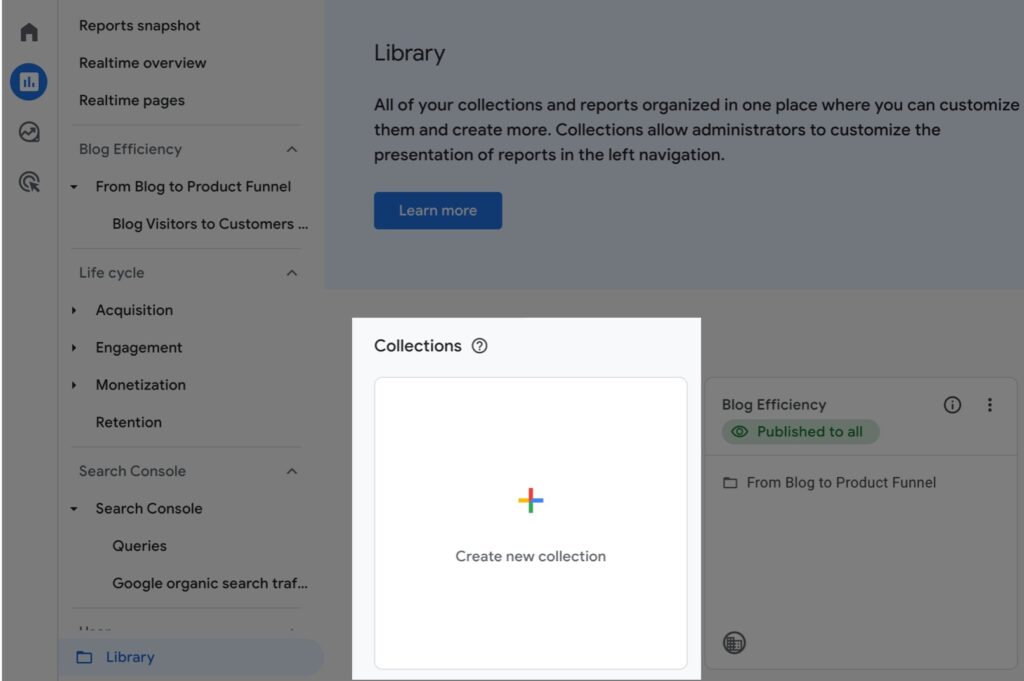
- Click on the “Make a new collection” box and select the Blank one.
- Give a narrative name to the collection.
- Create a new subject to define your customized report.
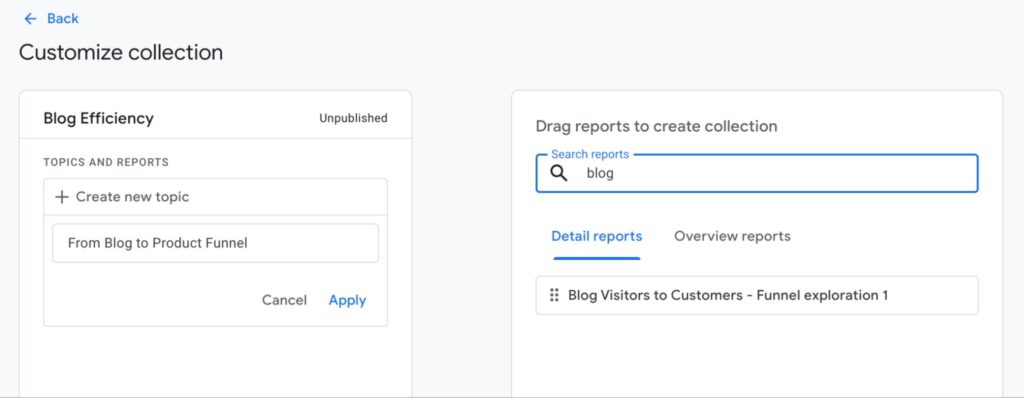
- Find your research report by searching in the right panel, and one time you discover it, drag and drop it into the subject box you have just established and click the Save button.
- Go back to the Library, discover your latest collection, click on the 3 dots icon, and then choose the Publish option to create your custom report live.
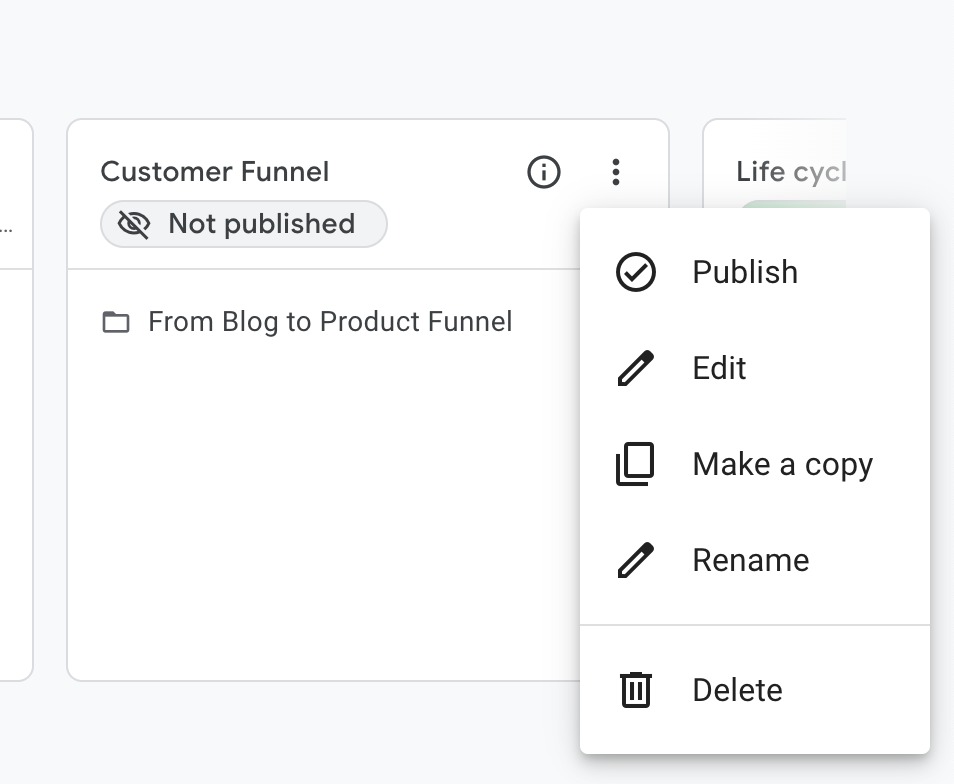
- Refresh the GA4 app, and currently you can look at your customized report in the left panel, only like GA4’s default reports.
Common Pitfalls To Watch Out For
These are issues I encounter frequently:
Chasing Low-Impact User Actions
Spending time on low-impact initiatives offers the sense of progress but rarely delivers substantial benefits. Focusing on high-value activity that is firmly related to business results ensures effort actually transforms into impact.
Complicated Naming
This creates long-term reporting more difficult than it requires to be. Use precise, descriptive, and brief naming for your excursions and collections.
Not Watching For Drop-off Points
Sometimes, the best chances is not the phase with the many volume, however the one closest to alteration. Therefore, when examining funnel drop-offs, I recommend that you search for:
- Largest complete loss of users.
- The biggest percentage drop between steps.
- Steps having the highest potential income impact.
Skipping Team Education
Sharing intelligence is improving, and not sharing is one of the most quickly ways to slow a team down. Regular knowledge-sharing assures everyone knows the “why” behind choices, fosters cooperation, and develops a culture where knowledge moves instead of bottlenecks.
A Practical 4-Week Plan To Get Started
You do not require to do all that at once. here is a simple 30-day approach:
Week 1:
- Audit existing tracking.
- Identify three major conversion-related events.
Week 2:
- Create one relevant custom event in GTM.
- QA and test it to make certain your events are firing correctly.
Week 3:
- Build your first funnel investigation report.
- Identify the phase with the largest drop.
Week 4:
- Share insights with your colleagues.
- Apply one improvement.
- Track results.
The Path Forward
As soon as you begin tracking comprehensive user experiences, you acquire a complete alternative level of perspective. It becomes easy to rank improvements, justify suggestions, and show how your endeavors contributes to business goals.
The biggest mentality shift for me was learning that SEO endeavors are not only for greeting people however also for increasing their experience within the web page once they get there.
However of course, you do not require to create all at once. go small, then scale systematically.
Read more blogs about digital marketing.